
services
Biofeedback
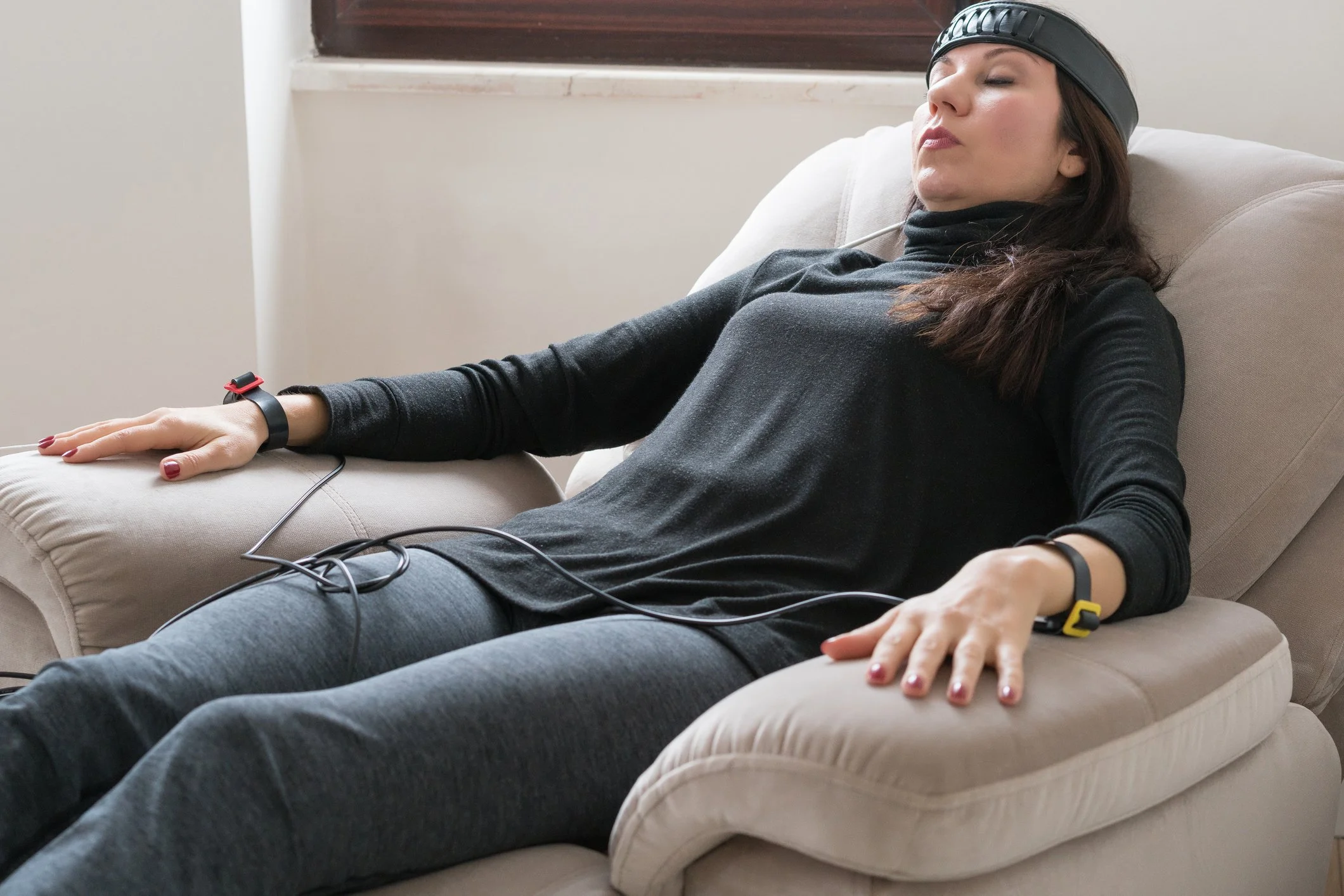
Biofeedback training is the process of having information about your body fed back to you, in real-time for the purpose of improving your health and making you more mindful of certain aspects of your body. Biofeedback is a tool to help you to learn how to become more mindful about how your body reacts to your thoughts and the environment.
Biofeedback training involves measuring various aspects of your autonomic nervous system such as heart rate, muscle tone, blood pressure, skin temperature, and the sweat on your hands. Please click on the various biofeedback modalities listed below for more information.

-
Breathing is essential to life, but good breathing can enhance our health and well-being. Breathing incorrectly for years can predispose you to chronic illnesses. Breathing incorrectly for 3 minutes can decrease oxygen to the brain and heart by 30%. This is why respiration training is so important.
Through biofeedback training you will learn how to better regulate your breathing pattern which can have numerous positive effects on you mental and physical health. With biofeedback respiration training, you will learn how to properly breath from the diaphragm and learn various types of breathing patterns. Respiration training can help improve conditions such as insomnia, anxiety, muscle tension, high blood pressure, and certain forms of pain. -
Heart rate variability (HRV) refers to the spontaneous change in your heart rate and is influenced by the rate of your respiration. This change in heart rate is due to the interaction between the sympathetic and parasympathetic branches of your autonomic nervous system. Your heart rate increases (sympathetic) with inhalation and decreases (parasympathetic) with exhalation. As the exhalations become slower and longer, there is more activation of the parasympathetic nervous system, which will lower your heart rate and increase your HRV. This phenomenon is referred to as vagal tone, which is an internal biological process that represents the activity of the vagus nerve. Increased vagal tone is associated with lower heart rate, increased HRV, and leads to relaxation. Biofeedback training is an excellent way to help train yourself to breathe slower, increase HRV, strengthen vagal tone and to recognize the sensations of relaxation so that you are able to return to this state of relaxation quicker and easier with practice.
-
Surface electromyography (sEMG) is the process of placing sensors on a muscle in order to detect the activity of that muscle. This biofeedback modality is great for helping people become more mindful of the tension they may be holding in an area of their body, for instance in the upper shoulders. Training how to relax a muscle through sEMG is called “down training”. SEMG is also used for “up training” a muscle that has become atrophied from an injury or has become inhibited from lack of use.
-
Temperature biofeedback training involves learning how to regulate blood flow to various parts of our body. Vasoconstriction and vasodilation are functions of the status of our autonomic nervous system. Basically, temperature training is about decreasing sympathetic nervous system arousal in order to warm a part of the body, usually the hands, as in the case of Raynaud’s syndrome.
-
Skin conductance (SC) is also known as galvanic skin response (GSR) and it refers to the ability for the skin to conduct electricity. SC depends on the amount of moisture produced by the sweat glands in your hands or feet. The more sweat that is produced, the more stimulated the sympathetic branch of the autonomic nervous system is activated. With increased stress or emotional arousal, our skin conductance increases (hands get sweaty). Biofeedback training helps to reduce the moisture on your skin by activating the parasympathetic nervous system through slow breathing techniques.

Diaphragmatic breathing
Diaphragmatic breathing, also known as “belly breathing”, is a type of breathing technique used in biofeedback training to help calm the nervous system. It involves learning how to breathe slower and deeper, where the respiration rate is typically between 4-6 breaths per minute. When you breathe at this slower rate, it can help to reduce feelings of tension, calm the mind and make you feel more relaxed. This relaxed state helps you to be more in touch with your body and assist with the healing process.

Living with persistent pain (also known as chronic pain, or pain that lasts longer than 6 months), causes changes in the brain and central nervous system that can alter the way you perceive pain. During an acute injury, your immune system produces pain and inflammation to help protect yourself from more harm and to allow time for the tissues to heal. When pain persists beyond the time the tissues have likely healed, then that kind of pain is stemming from the nervous system. The body is quite tricky this way and it can feel like the same kind of pain because the brain is highly skilled at protecting us. Pain education can help you to understand more about your nervous system and how it works. This learning process combined with very specific mind and movement exercises help to create new pathways in your brain. These new pathways help to turn the volume down on your persistent pain.
The exciting and interesting thing about the treatment of persistent pain is that learning about the neuroscience of pain is one of the treatments. Research shows that when people have a better understanding of the processes of how pain works in the body, it can ease fears and create hope.
Studies show that when back pain patients receive pain education in addition to a therapeutic exercise program, they tend to report less pain at the end of their therapy session compared to those who receive an exercise program alone.
Therapeutic Neuroscience education
YouTube video originally published by www.tamethebeast.org

Pain Coaching
Living with persistent pain effects every aspect of a person’s life: career, relationships, finances, recreation, sex life, etc. It is a complex human condition which requires a comprehensive treatment approach that is based on the biopsychosocial model of pain. Learning about the neuroscience of pain is central to the process of healing but having support and working toward more personal pain-reducing goals is just as essential. Persistent pain is a potentially stigmatizing condition which can lead to anxiety, depression, fear-avoidance, and poorer physical and mental well-being. And unfortunately, through no fault of their own, many primary care providers don’t have the time or skill to help guide a person suffering with persistent pain. This is why developing a patient-practitioner relationship with a pain coach who is knowledgeable in the neuroscience of pain can be an invaluable tool to returning to a more functional and enjoyable life.
Other Services
Guided Imagery, visualization and Meditation
Relaxation techniques
Trauma Resolution
Graded motor imagery
mirror therapy
Gentle Movement And Exercise
Rates
Initial Evaluation
$150 1.5 hours
Subsequent Sessions
$125 1 hour
Quick Check-In via Phone or Zoom
$30 20 min
